Green Roofs
What is a Green Roof?
Green Roofs are a composite roof system, typically consisting of thermal insulation, a commercial-grade waterproofing membrane, a root barrier, drainage system, growth substrate, and vegetation. These systems can be loosely laid in place or assembled in interlocking trays for ease of maintenance and modularity. There are many benefits to green roof systems over traditional single ply or built-up roofs, including:
Cooler temperatures
Green Roof systems provide shade over the building, and help moderate local and internal temperatures during the summer months. Sunlight is absorbed by the vegetation, which prevents heating of the roof membrane, reducing cooling costs in the summer months. Traditional exposed roof membranes are among the hottest surfaces in an urban environment.
Reduced maintenance and extended roof life
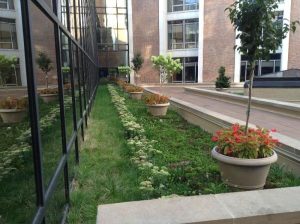 In addition to staying cooler, the roof membrane is protected from tears and punctures by the green roof assembly. The membrane is also protected from UV light exposure. UV light exposure causes gradual deterioration of the chemicals that make up most roof membranes.
The US General Services Administration estimates that Green Roofs can be expected to have a serviceable life twice as long as a conventional roofing system.
Greenhouse gas mitigation
During photosynthesis, plants remove carbon dioxide from the atmosphere. Plants can also remove volatile organic components (VOC), ozone, particulate matter, ammonia, nitrates, and sulfates from the air. Green Roof systems have a net positive impact on a building’s carbon footprint and help reduce pollution.
Stormwater Management
The vegetation and growth substrate also assist in managing stormwater. Stormwater is absorbed and stored by the growth substrate, where it can be used to sustain the vegetation. Green roof systems can retain as much as 90% of the storm water that falls on them, which alleviates the load on local sewer systems.
Support of Local Biodiversity & Pollinators
Many types of plants can be incorporated into Green Roof systems. The system can be tailored to support local biodiversity, especially pollinators such as butterflies and bees. Bee populations are declining at an unprecedented rate in the United States. The Rusty Patched Bumble Bee, native to Ohio, was even officially added to the endangered species list in 2017. By providing pollinator-friendly habitats in urban environments, Green Roof systems can help end the decline.
Aesthetics
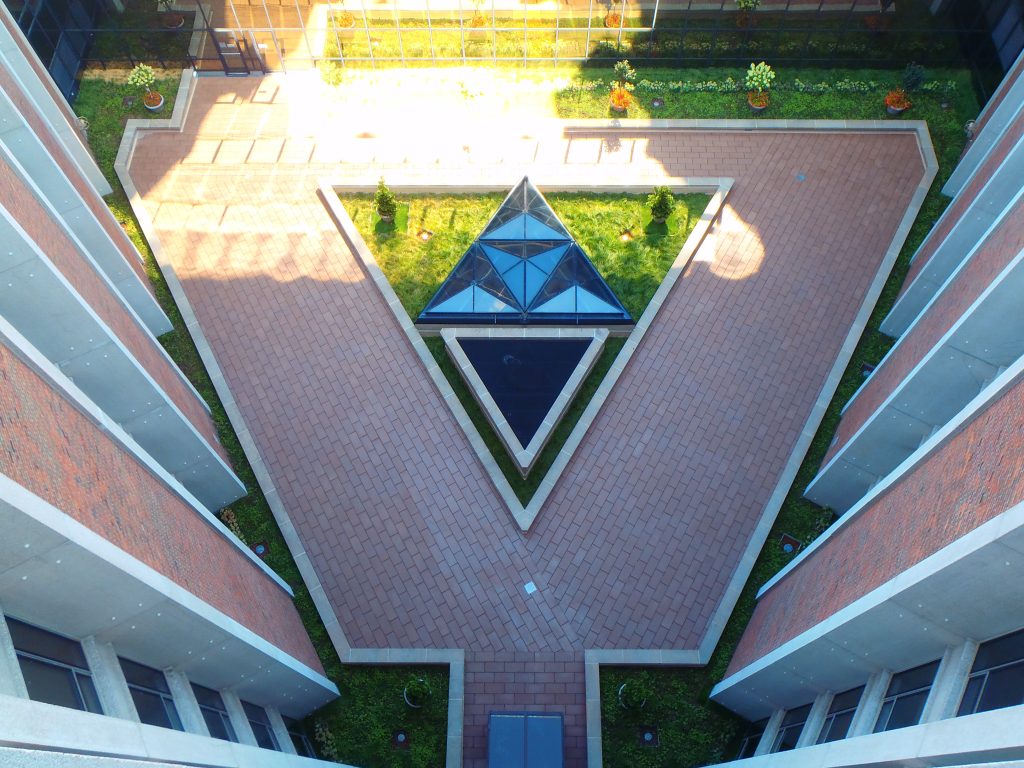 Green roof systems beautify the urban environment. The vibrant plant life helps in breaking up the often-drab appearance of a city block. This beautification can contribute to the value of a commercial property.
If you’d like your commercial or industrial building to share in the above benefits, contact Advanced Roofing Services today. Our Sales Consultants can assist you in designing a functional and beautiful Green Roof system that will benefit your building and your local community for years to come.